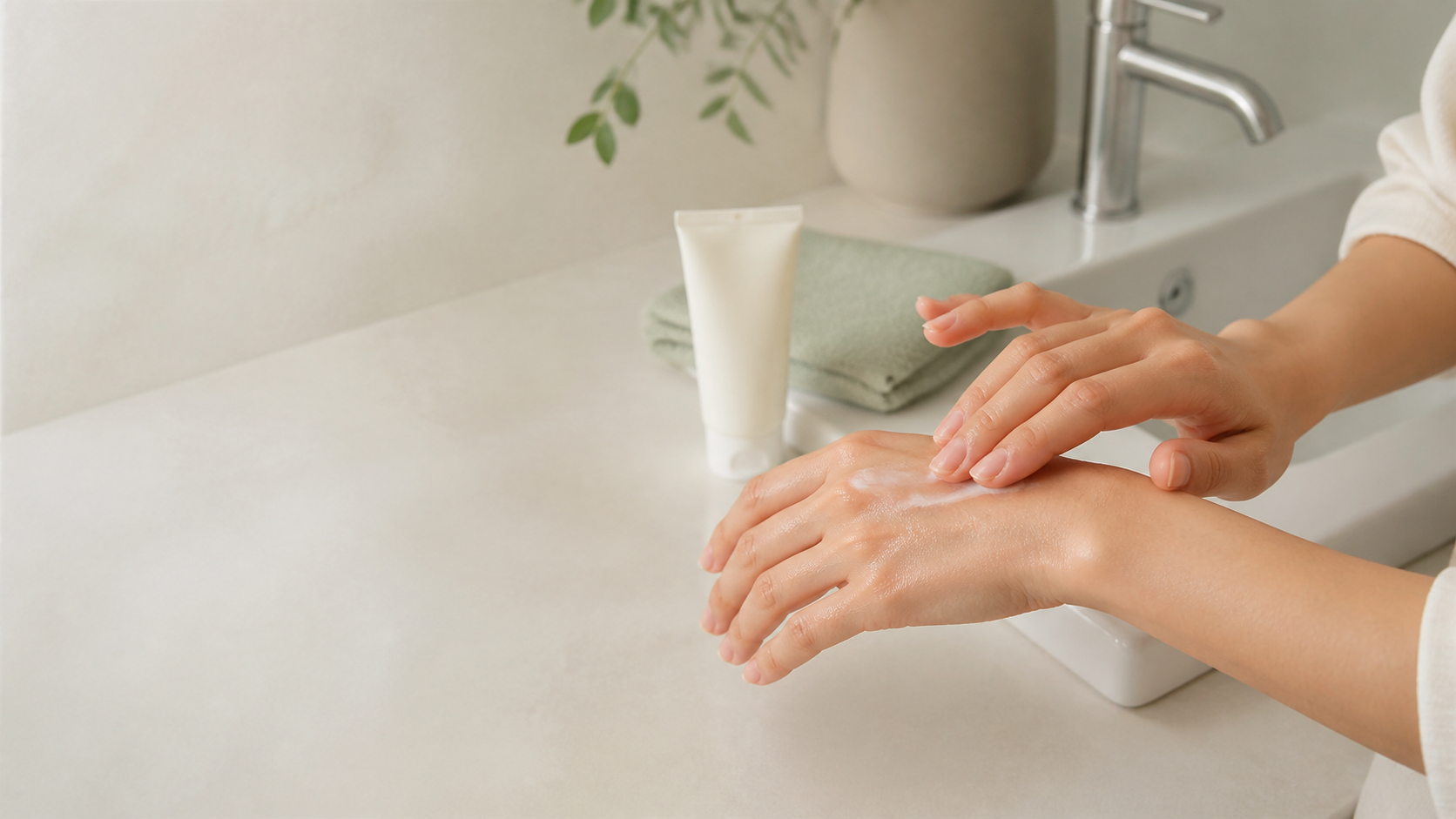
Handwashing is important and should continue whenever needed. If your hands become dry, small changes around washing can make the routine more comfortable without skipping hygiene.
Wash gently but thoroughly
Use soap and lukewarm water rather than very hot water. Clean all parts of the hands, including between the fingers and around the nails. Public-health guidance commonly recommends washing for at least 20 seconds. Rinse well so soap does not remain on the skin.
Dry without rough rubbing
Use a clean towel and pat the hands dry. The American Academy of Dermatology (AAD) suggests leaving the skin slightly damp before moisturizing. Vigorous rubbing can add friction when hands already feel sensitive.
Moisturize immediately
Apply hand cream or ointment while the hands are slightly damp, covering the palms, backs of the hands, fingertips, and around the nails. Reapply whenever the hands feel dry, especially after washing. A tube or tub product may feel richer than a pump lotion, but the best choice is one you can use consistently.
If fragrance or dye seems to bother your skin, consider a fragrance-free and dye-free option. “Unscented” is not always the same as “fragrance-free” because fragrance ingredients can be used to mask other odors.
Protect hands during wet work
Wear suitable gloves for dishwashing, cleaning, or prolonged contact with water and detergents. Make sure the inside of the gloves stays dry. If sweating inside gloves is a problem, take breaks and allow the hands and gloves to dry.
Keep moisturizer where you need it
Place a small hand cream near the sink or carry one in your bag. This removes an extra step and makes it easier to moisturize after washing. At night, some people prefer a thicker fragrance-free cream or ointment, but avoid a product that stings or worsens irritation.
When to ask for help
Stop using a product that causes swelling, a spreading rash, strong burning, or worsening discomfort. Deep cracks, bleeding, signs of infection, or dryness that does not improve deserve assessment by a qualified healthcare professional or dermatologist. This routine supports everyday comfort; it does not diagnose or treat a skin condition.
A quick routine to remember
- Wash thoroughly with soap and lukewarm water.
- Pat dry and leave the skin slightly damp.
- Apply moisturizer to all parts of the hands.
- Reapply after washing or whenever dry.
- Use gloves for wet or detergent-heavy work.