Skin can feel dry or tight after a shower, especially after long, hot showers or when using a cleanser that feels harsh. A good body-care routine does not need many products. A few gentle steps, repeated consistently, may help your skin feel more comfortable.
Why moisturize after a shower?
Water left on the skin begins to evaporate after bathing. Applying moisturizer while your skin is still slightly damp can help hold some of that water at the skin’s surface. The American Academy of Dermatology recommends moisturizing soon after bathing and gently patting the skin dry instead of rubbing it.
A simple 5-step routine
1. Keep the shower short and comfortably warm
Try to limit your shower to about 5 to 10 minutes. Use warm water rather than very hot water, which can leave already-dry skin feeling less comfortable.
2. Cleanse gently
Use a gentle cleanser and focus it on areas that need washing. If your skin is dry or sensitive, consider a product labeled “fragrance-free.” “Unscented” is not always the same as fragrance-free, so read the label carefully.
3. Pat—do not rub—your skin dry
Use a clean towel and gently pat your body. Leave the skin slightly damp instead of rubbing until it is completely dry.
4. Apply moisturizer right away
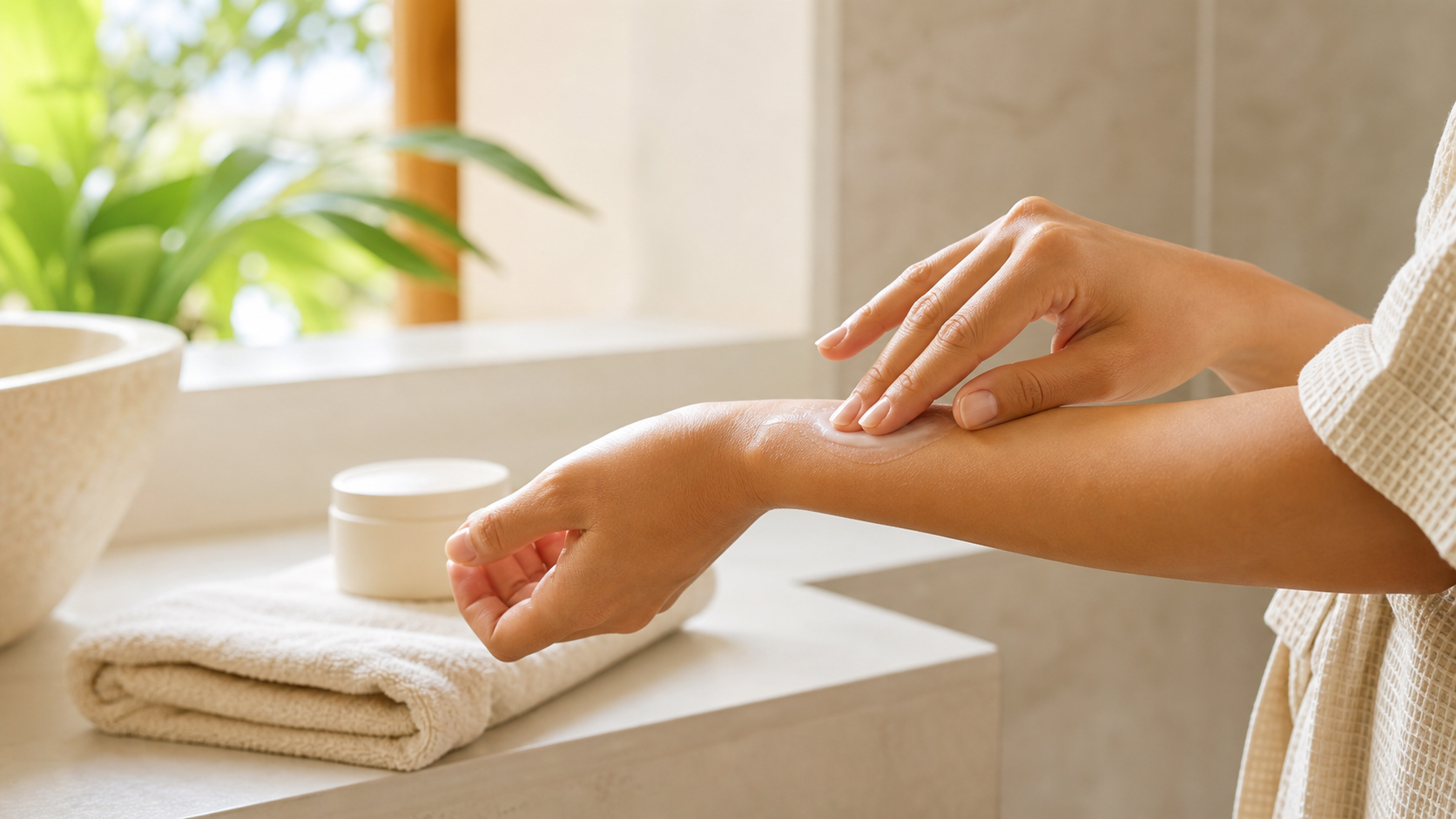
Smooth moisturizer over the skin while it is still slightly damp. Choose a texture that feels comfortable enough for you to use regularly. A lotion may feel lighter, while a cream or ointment may suit skin that feels very dry. Follow the product label and avoid applying body products to areas the label does not recommend.
5. Give dry areas extra attention
Elbows, knees, heels, and hands may feel drier than other areas. Apply a little more moisturizer to these spots when needed, without scrubbing or aggressive exfoliation.
Introduce a new product carefully
Even a product described as “natural” or “hypoallergenic” can still cause a reaction for some people. Before using a new product widely, the American Academy of Dermatology recommends testing it on a small area twice daily for 7 to 10 days, following the product directions.
Stop using the product if you notice redness, itching, swelling, burning, or another unexpected reaction. Gently wash it off. Seek professional care if the reaction is severe, or if it does not improve.
Common habits to avoid
- Long showers with very hot water
- Rubbing the skin hard with a towel
- Scrubbing skin that already feels dry or irritated
- Adding several new products at the same time
- Ignoring the directions and warnings on the product label
When should you get professional advice?
Speak with a qualified healthcare professional if dryness continues despite gentle care, or if your skin becomes painful, cracked, bleeding, swollen, very itchy, or develops a persistent rash. These signs may need individual assessment rather than another cosmetic product.
Keep the routine easy
The most useful routine is one you can follow consistently: a short warm shower, gentle drying, and moisturizer applied while the skin is still slightly damp. Adjust the product texture to what feels comfortable for your skin, and stop if irritation develops.