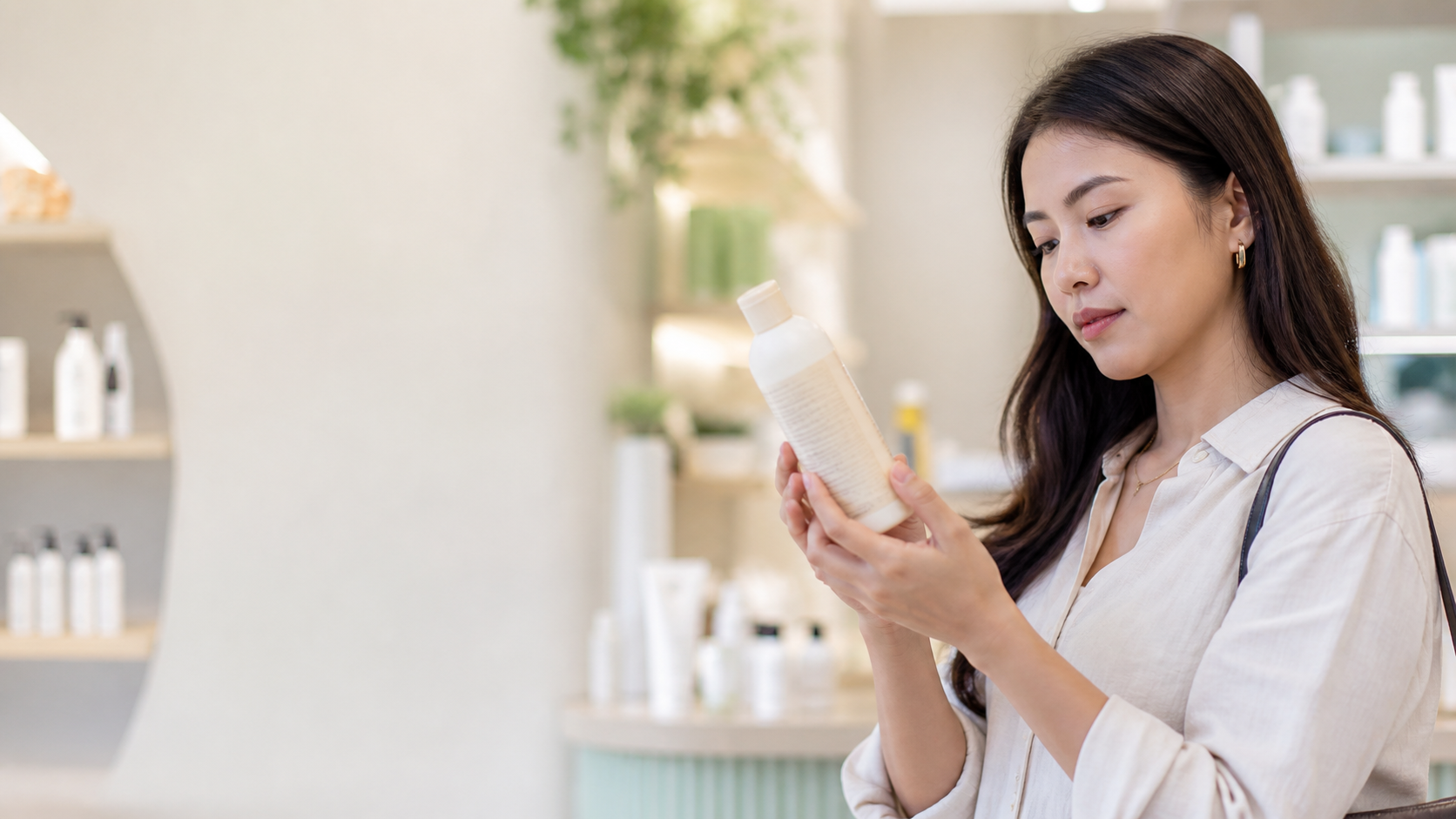
Small print can feel overwhelming, but you do not need to memorize every ingredient. Start with the product’s purpose, directions, warnings, ingredient list, amount, and responsible company. Label rules differ by country, so this guide explains useful general checks rather than the law for every market.
1. Confirm what the product is for
Read the product identity and intended use. A face product is not automatically suitable for the eyelids or lips. If the directions limit the product to a certain body area or say to rinse it off, use it that way.
2. Read directions and warnings
Check how much to use, how often, whether the product must be rinsed, and what areas to avoid. Look for age, sun-sensitivity, storage, or allergy warnings when relevant. A product that you cannot use as directed is not a good choice, even if the front label sounds attractive.
3. Check the ingredient list
Cosmetic labels commonly list ingredients using standardized names. In the United States, the U.S. Food and Drug Administration (FDA) says ingredients are generally listed in descending order of predominance, with exceptions including color additives and ingredients present at one percent or less. Other markets may use different rules.
If you already know that you react to an ingredient, look for its name and possible related names. Fragrance mixtures may appear as “fragrance” or “perfume,” so the label may not list every fragrance component separately.
4. Understand front-label terms carefully
Words such as “natural,” “hypoallergenic,” “for sensitive skin,” or “unscented” should not replace a full label review. FDA consumer guidance notes that U.S. federal standards do not define some sensitivity-related terms. “Unscented” can also mean that fragrance ingredients were used to mask another odor. If fragrance is a concern, look for “fragrance-free” and still check the ingredient list.
5. Check the amount, date, and storage information
Compare the net quantity—not just the container size—when comparing value. Look for an expiry date, batch code, or period-after-opening symbol if present. Follow printed storage instructions and do not buy a container that is open, damaged, or leaking.
6. Identify who is responsible for the product
Look for the manufacturer, distributor, importer, or other responsible business named on the package, plus contact information when provided. Keep the packaging or take a clear photo of it if you may need to ask a question or report a reaction.
Claims deserve a second look
In the United States, a product promoted to treat disease or affect the body’s structure or function may be regulated as a drug rather than only as a cosmetic. Rules vary elsewhere, but strong claims such as “cures acne” or “permanently removes wrinkles” deserve caution. Look for clear directions and reliable evidence, and consult a qualified professional for a medical concern.
A quick shopping checklist
- Is the intended use clear?
- Can I follow the directions safely?
- Does the ingredient list contain something I avoid?
- Are warnings and storage instructions clear?
- Is the container sealed and undamaged?
- Is the quantity and responsible company identified?